Reading is never a competition. As a proud book nerd and reading evangelist, I’m passionate that whatever, however and however much you read is wonderful, valuable and valid.
But if neither the size nor style of our reading lists really matter, why do I still set annual estimates for myself that I track, analyse and report against – including the 198 books I read in 2024?
Well, because I’m a book nerd and hermit with basically no other hobbies, of course. But also… In celebration of books, words, writers and ideas, and with gratitude for their wisdom, distraction, stimulation, smiles, and opportunities for understanding and growth. In recognition of the power of stories to tell us who we are and who we can be, and (more necessary than ever) the power to change minds and save lives. And as an act of advocacy – to help make public a mostly private art form, and contribute to the ongoing diversification of our literary monoculture (which is still predominantly white, patriarchal and genre-biased).
Warning for Aboriginal and Torres Strait Islanders: the following includes the name of a person who has died.
Fave reads and recs
In 2023, my fave reads were fiction: reflecting my need for distraction and a rest from an excess of reality. But while 2024 continued to break the world and our hearts again and again, it also required a shift from ‘I can’t think about [all of the awfulness]’ to ‘information is power’ and ‘I need to try to understand’.
So, while fiction still made up 80% of my reading in 2024 (down from 90% the year before), my top recommendations are all non-fiction. These can also be filed under ‘books that made me a better human’ or ‘books I wish every single person on the planet would read’.
- The Very Short History of the Israel-Palestine Conflict by Israeli historian Ilan Pappé is an essential, considered and well-evidenced present-day primer for anyone still unclear about the ongoing impact of settler colonialism in the region, or its significant influence closer to home (given which, and at just under 4 hours in audio book form, what excuse is there really not to read it?).
- Years before her fight against Australia’s compromised and censoring news agencies made headlines, Antoinette Lattouf literally wrote the book on the subject. How to Lose Friends and Influence White People is a powerful, personal and vital anti-racism and media justice guide that includes practical tips for activists, allies, callers-out and callers-in. Read as #17 of the Read Harder challenge for a book about media literacy.
- It may have taken me me five years to get around to White Tears/Brown Scars by Ruby Hamad, but I haven’t shut up about it since. It’s an insightful and powerful exposé of how white feminism is used as a weapon of white supremacy and patriarchy, which should quite simply be required reading for all feminists and white allies. Read as #34 of The Diverse Baseline challenge for a book by a BIPOC author about intersectional feminism.
- I was also grateful for Leah Lakshmi Piepzna-Samarasinha’s The Future Is Disabled: Prophecies, Love Notes and Mourning Songs, which is one of the most radically hopeful books I’ve read in a very long time – with deep, supported learning about disability justice, community, ingenuity and care. Read as #19 of The Diverse Baseline challenge for a book by a Disabled BIPOC author.
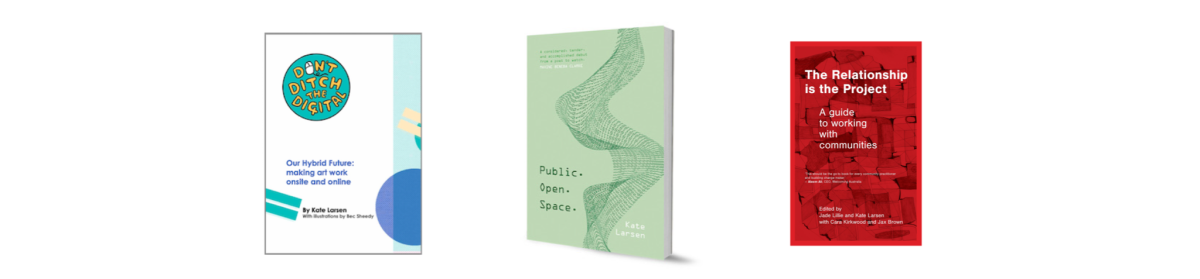
- And, of course, I have to mention the second edition of The Relationship is the Project: a guide to working with communities, which we launched in March with NewSouth Publishing (also the highlight of my 2024 writing year). Feedback on the book has been overwhelmingly positive, and we couldn’t be prouder of the difference it’s making in the world.
Blak Books
G’ua G’ua and Erub/Mer multi-media artist and activist Destiny Deacon, who coined the term ‘blak’, died in May 2024. ABC’s editor of Indigenous Radio Daniel Browning explains that: “Blak, rather than Black, was [Deacon’s] kind of rejoinder to being called a black C[***] her whole life. So she took the C out of Black and turned it into something political.”
I made and met a personal commitment to read at least 1 Blak book by a First Nations writer each month in 2024. I loved all 12, but particular highlights were:
- Noongar Boodja Waangkan: Noongar First Words by Jayden Boundary and Tyrone Waigana (a must-have for everyone living on Noonga Boodja in SW Western Australia). Read as #11 of the Read Harder challenge for a picture book published within the last five years.
- The Rocks Remain: Blak Poetry and Story edited by Karen Wyld and Dominic Guerrera (an extraordinary, startling and powerful collection of Blak stories and poetry in which I dog-eared nearly every page). Read as #23 of The Diverse Baseline challenge for an anthology by BIPOC authors.
- We Didn’t Think It Through by Gary Lonesborough (more grimly real and insightful First Nations YA about racism, expectations and the slow bruise of colonisation – which was a particularly challenging read after a year with the most Aboriginal deaths in custody since 1980). Read as #4 of The Diverse Baseline challenge for a book by a Black/Blak author.
- The Visitors by my pal Jane Harrison (a thoughtful, funny, fierce and gut-wrenching reimagining of the First Fleet’s colonisation of ‘Australia’ from a First Nations perspective). Read as #5 of The Diverse Baseline challenge for an Historical Fiction book by a BIPOC author.
- mark the dawn by Jazz Money (a powerful and hopeful new collection of poetry about gathering, remembering and mark-making from the intersection of queer and First Nations culture).
Read Harder
2024 was my second year attempting BookRiot’s Read Harder Challenge, which invites readers to explore formats, genres and perspectives that go beyond their reading comfort zones and diversifies their TBRs. I completed all 24 challenges, and my particular highlights were:
- Greater City Shadows by my pal Laurie Steed (a gentle, generous and insightful gift of short fiction about vulnerability, relationships, identity and humanity). Read as challenge #14 for a book by an author with an upcoming event I would attend (which I did at the 2023 Perth Festival Writers Week).
- This Book Is Anti-Racist: 20 Lessons on How to Wake Up, Take Action, and Do the Work by Tiffany Jewell with Aurélia Durand (a thoughtful, practical workbook I desperately wish I could gift to my own younger self). Read as challenge #15 for a YA nonfiction book.
- Let Me Be Frank: A Book About Women Who Disguised Themselves As Men to Do Shit They Weren’t Supposed to Do by Tracy Dawson (a collection of fierce, frustrating and FUNNY short portraits). Read as challenge #18 for a book about drag or queer artistry.
- Tomorrow Someone Will Arrest You by Meena Kandasamy (extraordinarily powerful protest poetry about resistance and solidarity, relationships and resilience, and the safety and rights of women in India and everywhere). Read as challenge #24 to pick a challenge from any of the previous years’ challenges to repeat (a poetry book from 2023).
I recorded all of my challenges on StoryGraph. Who’s joining me to Read Harder in 2025?
The Diverse Baseline
In its first year, I completed all 36 challenges of The Diverse Baseline reading challenge to read a minimum of three books by nonwhite, mixed race or racialised authors per month. My particular highlights were:
- Things You Might Find Hidden in my Ear: Poems from Gaza by Mosab Abu Toha (an extraordinary, brutal and beautifully written collection of startling, sobering and devastating poems about a lifetime under siege in Gaza). Read as challenge #11 for book by a Southwest Asian and North African (SWANA) author.
- Chai Time at Cinnamon Gardens by Shankari Chandran (which is not the light, easy read it’s pretty cover suggests, but rather a startling, devastating and uncomfortably true-to-life mirror of contemporary Australian racism). Read as challenge #12 for book by a BIPOC author about colonisation.
- Non-Essential Work by Omar Sakr (a powerful and provocative poetry collection about love and loss, the relentlessness of dislocation and prejudice, and the everydayness of trauma and grief, through the lens of the Arab-Australian experience). Read as challenge #16 for a book by a BIPOC Queer author.
- Good Talk: A Memoir in Conversations by Mira Jacob (a wonderful, heart-felt and heart-breaking graphic memoir based around difficult questions from the author’s mixed-race son in the lead-up to Trump’s first run at President). Read as challenge #26 for a memoir by a BIPOC author.
- Yellowface by Rebecca F Kuang (an all-too-real exposé of our literary and publishing sector’s monoculture, about appropriation and entitlement, community and cancel culture). Read as challenge #28 for a Horror, Thriller, or Mystery by a BIPOC author.
- Beyond the Binary by Alok V Menon (a clear, compelling and compassionate introduction to the full gender spectrum outside our aggressively normative status quo – including a comprehensive list of well-reasoned and evidenced counterarguments to have under the table for uncomfortable family dinner conversations). Read as challenge #29 for a book by a Trans BIPOC Author.
- Minor Detail by Adania Shibli (which absolutely destroyed me with the haunting, granular prose of its parallel stories about the everyday violence of life in occupied Palestine). Read as challenge #31 for a literary fiction book by a BIPOC author.
I recorded all of my challenges on Storygraph and will be doing The Diverse Baseline challenge again in 2025. Who’s joining me?
We Need Diverse Books
Overall, I read 138 books for the #WeNeedDiverseBooks challenge (70% of my reading total), in which: “people of colour can be first-page HEROES rather than second-class citizens. Books in which LGBTQIA+ characters can represent social CHANGE rather than social problems. And books where disabled people can be just… people.” Highlights not already listed above include:
- Against the Loveless World by Susan Abulhawa (stark, sobering and stunningly written literary fiction from inside the ongoing colonisation of Palestine – a story of survival, resistance, deep love and unimaginable loss. Not an easy read, but an important one).
- Before the Next Bomb Drops: Rising Up from Brooklyn to Palestine by Remi Kanazi (an urgent and unflinching poetry collection that has only become more relevant and more desperate since it’s 2015 release).
- Disability Visibility: First-Person Stories from the Twenty-First Century edited by Alice Wong (an important and diverse collection of powerful personal essays from disabled Americans to commemorate the 30th anniversary of the Americans with Disabilities Act and how far there is still to go. From fashion to representation, institutionalisation to accessible incarceration, this book made me THINK in all the best ways).
- Stand Up and Speak Out Against Racism by Yassmin Abdel-Magied (part of the new wave of clear, power-filled anti-racism primers that is going to build stronger, more prepared and empathetic children – and help a lot of adults navigate our increasingly polarised world too).
Since making the move to Storygraph (a black and female-owned GoodReads alternative with better data visualisation and fewer evil corporate overlords), I also know four of my ten most-read authors for 2024 were writers of colour, a vast improvement on my embarrassingly white historical reading lists (something I’m actively trying to improve). Reflecting the most common genres I read in 2024 (which were the same as the year before: romance, LGBTQIA+, contemporary, fantasy and YA), this includes multiple books by Talia Hibbert, Nisha Sharma, Kimberley Lemming and Sonali Dev – all of which I highly recommend.
Books that will stay with me
Sometimes, book find us at exactly the right time. In addition to all those already listed above, other books I needed, can’t stop thinking about, or know will stay with me include:
- A Manual for Heartache by Cathy Rentzenbrink (heartbreaking but helpful reflections on navigating your own and others’ acute and enduring grief).
- On Freedom by Tory Shepherd (a clever and irreverent pocket guide to the choices and complexities of choosing to be childfree that I needed all the way down to my bones).
- Unicorns on Fire: A Collection of NonprofitAF Posts, Finally Edited for Spelling and Grammar by Vu Le (a collection of rabble-rousing provocations about radical equity, ethical fundraising, community leadership, better practice governance and more).
Books that made me smile
Reading is my safe space. So, while the world is so hard, I am particularly grateful for the books that bring joy. In 2024, this included:
- The Secret Service of Tea and Treason, the third book in India Holton’s Dangerous Damsels series (swashbuckling and fiercely feminist Victorian-era MF romances with flying houses, pirates, secret societies and spies).
- The Brown Sisters’ series by Talia Hibbert (sweet and steamy MF romcoms with Hibbert’s characteristically diverse, sensitive and self-determined representation, including the first romance I’ve found with a main character with a chronic fatigue condition).
- Kimberly Lemming’s Mead Mishaps (fun and spicy MF romantasies with pirates, dragons, magical curses and quests).
- The Will Darling Adventures by KJ Charles (delightful and witty opposites-attract MM historical romance / aristocra-spy series that romps through the bookshops and sinister secret societies of post-WW1 London).
- Something Extraordinary by Alexis Hall (the third deliciously giggly queer romcom in his Something Something Regency romance series, a platonic/aromantic MF love story full of hijacks and hijinks, mutual abductions and rescuings).
- Three Pride & Prejudice reimaginings: Most Ardently by Gabe Cole Novoa, Eligible by Curtis Sittenfeld and Pride, Prejudice and Other Flavors by Sunali Dev.
- Big Trouble with Angry Chairs by my pal Lachlann Carter (wonderful middle grade adventures with bonus existential chair-sitting crisis).
- And being welcomed back to Naarm with two books made and set in Melbourne written by two Melbourne pals: A Clear Flowing Yarra by Harry Saddler and Kind Of, Sort Of, Maybe, But Probably Not by Imbi Neeme (who I interviewed for its online launch).
What were your reading highlights?
Subscribe or support
For future updates, subscribe to my free occasional enews.
If any of my work or writing has been of value to you, I’d appreciate you joining me as an advocate, ally or accomplice from just $2.50/month on Patreon).

 LARSEN | KEYS
3 thoughts on “My 2024 reading year”