Poems, place and digital space: online poetry in Australia, China and Hong Kong

<content>
<hidden>
<code>
<delete> <delete>

Over the past three decades, digital platforms have become a significant global player in the development and dissemination of poetry.

Variously referred to as e-poetry, electronic or cyber poetry, digital poetry, social media or Instapoetry and more, Australian digital poet and Professor of Electronic Literature Jason Nelson defines the artform as ‘the combination of technology and poetry, with writers using all multi- media elements as critical texts. Sounds, images, movement, video, interface/interactivity and words are combined to create new poetic forms and experiences’.

Like other online art forms, the creation and consumption of digital poetry has grown further and faster since the COVID-19 pandemic—as more people turned to poetry to make sense of the changing world and shared that poetry through one of the only platforms available to them during that time. ‘Poems are ideally suited to social media,’ New York journalist Michelle Dean writes, ‘because they pack so much meaning into so little language.’

However, this coming together of digital and poetic culture is different for poets in different countries, depending not just on geographic and internet access but language use and platform preferences, as well as the degree to which online activity is monitored, censored or controlled.

Continue reading “Poems, place and digital space: online poetry in Australia, China and Hong Kong”

The power of digital poetry

At last month’s Perth Festival Writers Week in Boorloo/Perth, I began my Tiny Little Digital Poetry workshop with the following:

Given Perth Festival Writers Weekend brings writers and readers together in a colonial city built on unceded Noongar Boodja, it’s impossible as a guest writer not to acknowledge that our writing colleagues here and overseas are currently being killed, threatened and censored at unprecedented rates.

Continue reading “The power of digital poetry”

And another thing: on profiles and platforms

Preparing to teach a recent workshop on building an artist or author brand made me realise how much my approach to my own brand and online profile has changed over the last several years.

That feeling has been exacerbated over this last awful month, in which the social media spaces I have held in such esteem have become sites for both community making and lonely making, action and distraction, truth-telling and shadow-banning, finding and losing of trust.

It’s been a timely reminder that our online profiles are political – regardless of whether we using them to share political content or politicise our silence.

Continue reading “And another thing: on profiles and platforms”

And another thing: Zoom fatigue and our hybrid future

When Zoom has Zoom fatigue, what hope is there for the rest of us? This month’s ‘and another thing’ vlog talks about the depressing trend of employers ditching digital ways of working and the importance of fighting for a more hybrid future.

Continue reading “And another thing: Zoom fatigue and our hybrid future”

Public. Open. Space. on The Garret podcast

“I think it’s important for writers to bump up against our level of comfort and to question the assumptions and the privilege that we carry with us. That’s not always a comfortable process.”

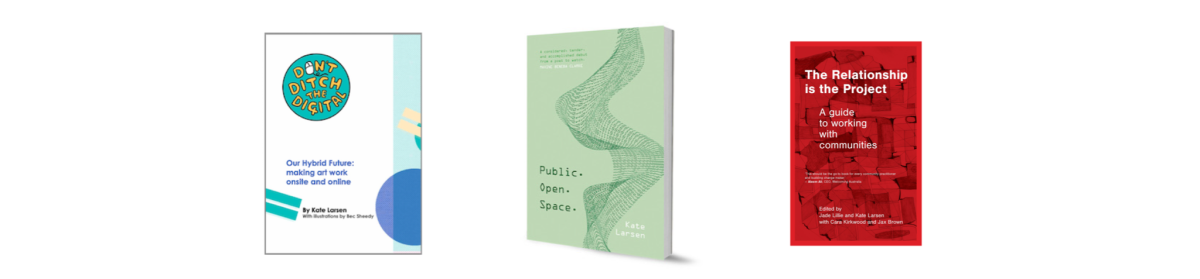
I had a lovely chat with Astrid from The Garret pocast about poetry, arts funding and The Relationship is the Project following the launch of Public. Open. Space. in June. 

Continue reading “Public. Open. Space. on The Garret podcast”

We can do better than Boards

Following my collaboration on AICSA’s Rethinking Arts Governance event last year, I articulated some issues arts organisations have with arts Boards and shared examples of Boards making the best of the current situation.

In doing so, it became depressingly clear that our sector has learned how to bend without breaking when it comes to arts governance. But if the cause of most of our Arts Boards’ dysfunction is the governance model itself, perhaps a break is what we need – to throw the model out and start again.

Continue reading “We can do better than Boards”

Our hybrid (accessible) future

COVID-19 rushed the world into digital and hybrid ways of working faster than anyone could have imagined. Unsurprisingly, this led to a lot of reverse-engineering, working-it-out-on-the-job, and many of us getting things wrong. However, it also led to new ways of working and making from which many don’t want to return.

Continue reading “Our hybrid (accessible) future”