Arts boards and organisations, stop using cultural safety as an excuse to make your programs, spaces and business practices less culturally safe.
My latest ‘and another thing’ vlog series is made up of three extracts from a longer rant to my Patreon followers on how the language of cultural safety is currently being weaponised to exacerbate our sector’s lack of accessibility, equitability and representation – primarily (though not exclusively) in response to Palestine.
Part 1 (this is not a trend, this is a reckoning):
Part 2 (on the dangers of ‘holding the line’):
Part 3 (yes, that means you):
Read more
I’ve been revisiting this warning from Vu Le’s Nonprofit AF: “The white moderate actively avoids anything controversial, anything that could be seen as “political.” Board members and organisation leaders, if you cannot publicly call out white supremacy, if you can’t denounce white nationalism, if in this moment when millions are risking their lives in a pandemic to protest against police racism and you think it’s too political or uncomfortable to say that Black lives matter [or Free Palestine] and act/fund accordingly, then you are a white moderate and you are part of the problem.”
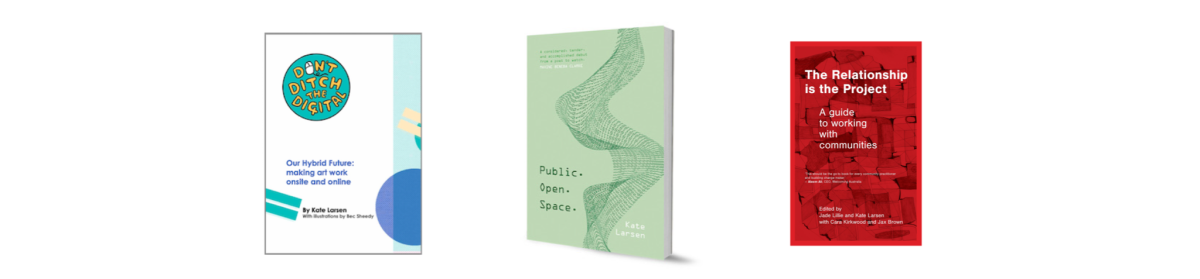
I also recommend you check out Dr Ruth De Souza’s chapter on going beyond inclusion when it comes to cultural safety and Esther Anatolitis’ chapter on the role of the institution in The Relationship is the Project.
Or, for a working example, you can read the open letter from MEAA Members for Palestine to the State Library of Victoria earlier this month.
As Stuart Kells observed in The Conversation: “Across Australia, state library legislation* is not up-to-date with the current mix of library functions, or the current library context. More fundamentally, the standard board-CEO governance model is increasingly ill-fitting. This is not just about the need for more diverse representation on boards and in management. It’s also about the wholesale adoption of new engagement methods, new modes of planning, and new ways of making and communicating decisions. As public institutions, libraries have a responsibility to be transparent about their decision-making.”
*Many of Kells’ provocations on how libraries are governed can be applied to the rest of the for-purpose sector too.
These videos were combined with my plea for Board members to think about Palestine and my letter to arts organisations and are now available on The Commons Social Change Library.
Further reading: Palestine as a governance issue
You can check out all of the articles and resources in this series, which include:
- And Another Thing: issues with appointed boards, January 2026
- Writers festival reflections, October 2025
- Take on Board podcast on the ethics of AI, August 2025
- Why we cancelled our Bendigo Writers Festival panel, August 2025
- And Another Thing: from censorship to systemic change, June 2025
- And Another Thing: receiving and responding to harm, March 2025
- Contextually fine, October 2024
- And another thing: board solidarity, October 2024
- The statements we make, August 2024
- And another thing: SLV as the example you don’t want to be, August 2024
- And another thing: organisational ethics and deficit areas, July 2024
- And another thing: on cultural safety, May 2024
- Take on Board podcast on Palestine as a governance issue, May 2024
- Palestine governance resources in The Commons, April 2024
- The power of digital poetry, March 2024
- Dear arts organisations, January 2024
- Board members, we need to talk about Palestine, December 2023
- Ally is a verb, October 2023
Subscribe or support
For future updates, subscribe to my free occasional enews.
If you’d like the full version or more of these rants, you can join me as an advocate, ally or accomplice for rethinking arts governance from just $2.50/month.

 LARSEN | KEYS
21 thoughts on “And another thing: on cultural safety”